Introduction
Most businesses have access to decent cameras, even if it is just a modern smartphone. They shoot video content, upload it directly, and wonder why it does not get traction. The missing piece is almost always professional editing.
Raw footage is to a finished video what rough notes are to a published article. The content might be there, but the presentation determines whether anyone engages with it.
Why This Topic Matters for Your Business
Video is now the primary content format across every major platform. Instagram prioritizes Reels. YouTube is the second largest search engine. LinkedIn feeds are dominated by video.
But platforms do not reward all video equally. Their algorithms favor content that keeps viewers watching. A video that loses viewers in the first three seconds gets buried. The difference between a video that gets five hundred views and one that gets fifty thousand is rarely the camera quality. It is the editing.
Core Concepts
### Pacing and Attention Retention
The single most important factor in marketing video performance is how long viewers keep watching. Professional editing addresses this by placing the most compelling moment at the very beginning.
A skilled editor restructures raw footage to front-load the hook. Instead of starting with a slow introduction, the video opens with the result, the controversy, the question, or the most visually striking moment. This technique alone can double or triple average watch time.
### Visual Quality and Brand Consistency
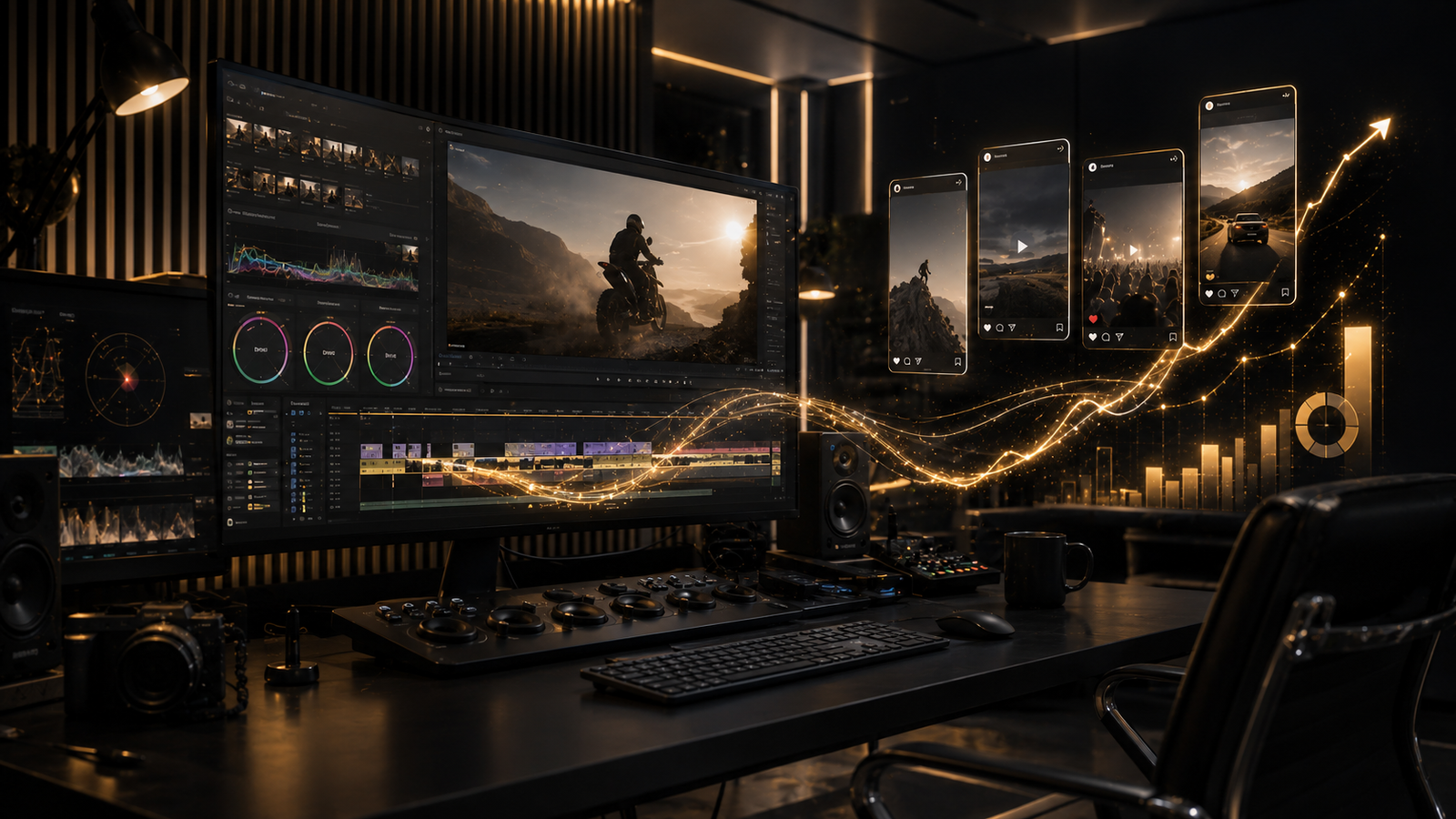
Professional editing includes color correction and grading that makes footage look polished and consistent across all your videos. Raw phone footage often has uneven lighting, color casts, and inconsistent exposure between shots.
Consistent visual quality across all your videos builds recognition and trust. The consistent color palette, typography, and editing style become associated with your brand.
### Text Overlays and Subtitles
A large percentage of social media video is watched without sound. Adding text overlays that convey key points ensures your message reaches viewers regardless of their audio settings.
Text overlays also serve a structural purpose. They break up long segments, emphasize key points, and guide the viewer through the narrative.
### Music and Sound Design
Background music sets the emotional tone of your video. The right track can make a product demonstration feel exciting, an educational segment feel authoritative, or a customer story feel authentic.
Sound design goes beyond music. It includes clean audio levels, removal of background noise, and subtle sound effects that enhance the viewing experience.
### Storytelling Structure
Raw footage rarely tells a coherent story in its original order. Professional editing involves reorganizing footage into a narrative arc that makes sense to the viewer. The editor selects the strongest shots, arranges them in a sequence that builds toward the intended message, and removes anything that does not serve the story.
Practical Business Examples
A real estate developer shot walkthrough videos of their properties using a smartphone. The raw footage was shaky and ran three to four minutes per property. After professional editing, each video was trimmed to ninety seconds, color-graded, stabilized, and enhanced with text overlays showing specifications and contact information. Property enquiry rates from these videos increased by 180%.
A fitness studio created workout demonstration videos in-house. After adding branded intros, dynamic text overlays, upbeat music, and consistent color grading, their social media engagement tripled and their video content became a primary driver of new membership enquiries.
Common Mistakes
Editing for length instead of engagement. Cutting a five-minute video to two minutes because shorter is always better removes valuable context. The right length is whatever serves the content and holds attention.
Overusing effects. Excessive transitions and flashy animations distract from your message rather than enhancing it.
Ignoring the first three seconds. If your video opens with a logo animation or slow introduction, most viewers will never see the rest.
Neglecting audio quality. Viewers will tolerate mediocre video quality far longer than poor audio. Invest in audio cleanup even if your visual editing budget is limited.
Best Practices
Create editing templates. Establish standard formats for your video types to speed up production and ensure consistency.
Design for silent viewing first. Ensure your video communicates its message through visuals and text overlays alone.
Optimize for each platform. Edit separate versions optimized for each platform's specifications and audience expectations.
Repurpose long-form content. A single long video can be edited into multiple short clips, quote graphics, and behind-the-scenes content.
Step-by-Step Framework
Step 1: Plan Before You Shoot. Define the video's goal, target platform, and key message before recording.
Step 2: Capture Quality Raw Footage. Shoot more than you need. Record in the highest quality your equipment allows. Ensure audio is clear.
Step 3: Brief Your Editor Clearly. Provide the video goal, target audience, brand guidelines, preferred style, and reference examples.
Step 4: Review and Refine. Watch from the perspective of your target audience. Does the hook grab attention? Is the pacing consistent?
Step 5: Optimize and Distribute. Create platform-specific versions. Add subtitles. Write captions. Schedule distribution for optimal posting times.
Actionable Checklist
- Video goal and target platform defined before shooting
- Raw footage captured in high quality with clear audio
- Professional editing brief prepared with brand guidelines
- Hook placed in the first three seconds of the video
- Color correction and grading applied for consistent look
- Text overlays and subtitles added for silent viewing
- Background music selected to match video tone
- Platform-specific versions created with correct dimensions
- Thumbnail designed for YouTube and social media posts
- Performance metrics tracked and reviewed weekly
Key Takeaways
Professional video editing is not a luxury or an afterthought. It is a strategic investment that directly impacts how your video content performs. Raw footage is the raw material. Editing is where marketing value is created.
The elements that matter most are pacing, the first three seconds, visual consistency, audio quality, and storytelling structure. These are the areas where professional editing creates the largest performance difference.